Could You Be an EV Driver? - Post No. 11
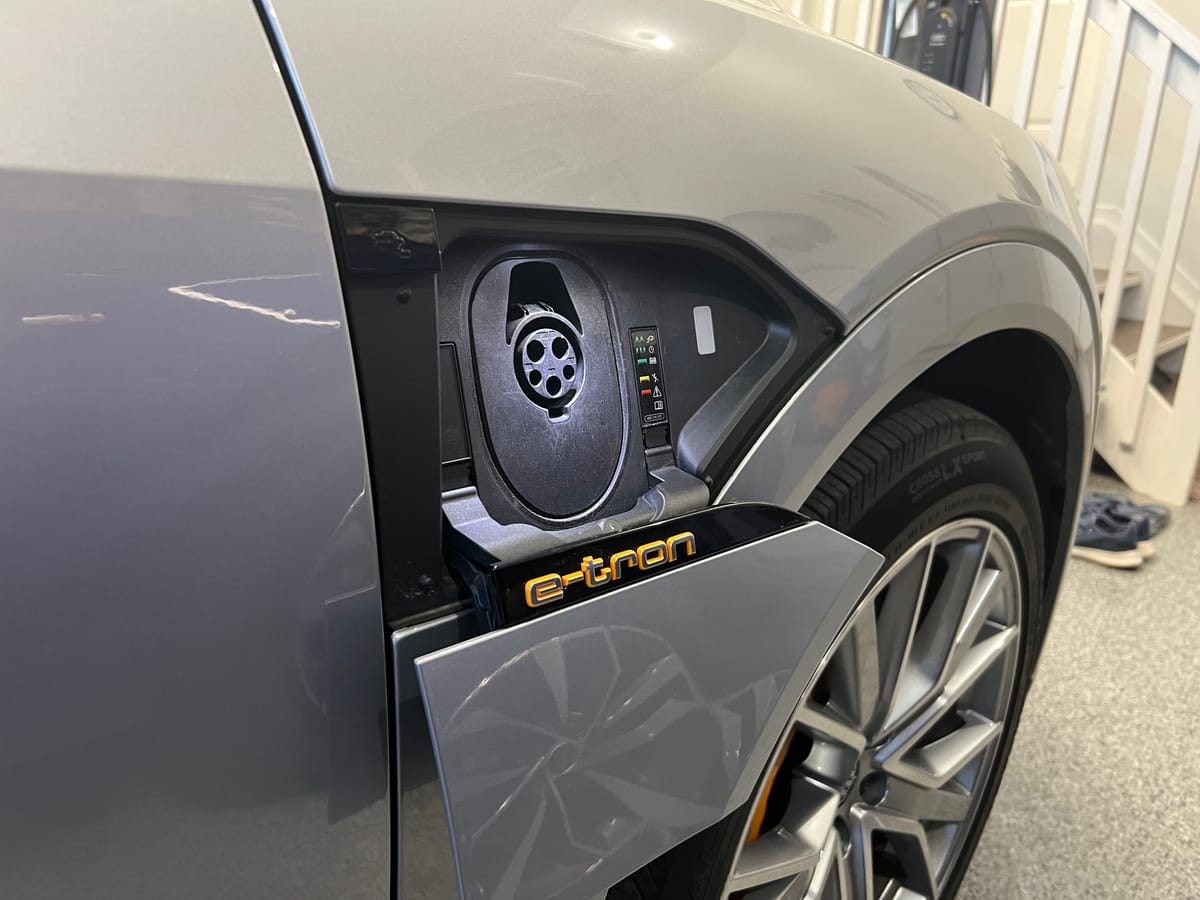
I mentioned in Post No. 9 that we converted half our vehicle inventory to electric this spring. If you live anywhere other than Alberta, the chances are that you've wondered if the switch to an electric vehicle makes sense, or is starting to make some sense. If you live in Alberta, your attention is more likely focused on how to avoid catching a disease you thought had been all but wiped out, like measles or mumps or polio or COVID. But that's an earlier post.
I don't claim that this is a definitive description of the advantages and disadvantages of EV ownership and operation - there are many people who've tackled the subject before me. But I've noticed there are more EV's among my circle of acquaintances, including friends and family, and more on the road than there has ever been. Perhaps you've had a similar observation.
If you are like me, your road travel has always been based on how long it takes to get somewhere, rather than how many kilometers or miles away it is. Long distance road trips in an electric vehicle require you to change that thinking. Calgary and Jasper may no longer be 3 1/2 hours away (although they might still be if you have the range), and Kamloops is no longer 7 1/2 hours. How far you can go before charging, and how long you will spend charging depends on a complex set of factors that requires computations that were invented by NASA: what is the weather? How big is the load you are carrying? How big is your battery? What is the rate at which your destination charger charges your car (some of them are super fast)? Will you need air conditioning, or heat? How much confidence do you have in the prediction made by one of the several programs you have on your phone or on your car's screen that predicts how much power you will use getting to the destination you've chosen? What sort of safety cushion would you like?
I am trying to convince myself, as a retired person, that getting somewhere in the shortest possible time is no longer the primary objective. Charging stops can range from 10 or 15 minutes, if you are just topping up before a longer leg, to an hour if you are nearly empty and need a full charge to carry on. Most stops are in the range of 35 to 40 minutes. Once you've given up trying to get somewhere as fast as possible, these stops can be enjoyable (especially when there are nearby cafes or shops to browse through) and certainly refreshing. I am a more alert driver when I've gotten out and walked around for a bit. There is no question though: with current charging technology you will spend a lot more time standing around outside your vehicle talking to fellow travellers than you ever did with your conventional car. It just takes longer to get somewhere if that somewhere requires a charging stop, or several of them.
I try to be clear-eyed about the disadvantages of EV ownership: the vehicles are more expensive to purchase (although that isn't entirely true in the used car market right now), there is uncertainty regarding battery life, they are less convenient to use away from home because of the charging time required. Because of the relative scarcity of commercial charging stations in Alberta (BC is years ahead in charging infrastructure) you spend a lot more time figuring out where your next charge will be while travelling, and worrying about getting there. This is called "Range Anxiety," a condition that is more acute in EV owners for two reasons: there are not charging stations everywhere you look - those are gas stations - and if you run out of power, you don't just grab a 5 gallon can and add gas to your tank. You call a tow truck. Range achieved in the winter will be considerably less than in the summer, for two reasons: the batteries are less efficient at lower temperatures, and the electric engine generates no heat that can be harvested to warm the vehicle's interior, that is done entirely with electricity, a drain on the battery.
If your reasons for making the switch are environmental, it is true that you have eliminated the emission of greenhouse gases by one vehicle, but there is considerable debate about whether the overall environmental effect is positive when you take into account the energy used and emissions created in making the battery and generating the electricity and the future challenge of disposing of the battery once it is consumed. But of course the process of finding oil, extracting it, refining it, transporting it to where it is delivered to the customer and disposing of byproducts also uses energy and creates its own emissions. In the case of the battery though, you do it once, while gasoline must be constantly found, extracted, processed and delivered to you. If you are lucky enough to live where hydroelectric power is plentiful, or where other options such as solar, wind or nuclear power exist, the calculation is different. Here in Alberta we tend to generate electricity by burning natural gas, so the emission reductions are diminished.
So why would you do this? I can think of three reasons:
- They are fun to drive. They are quiet and really quick and they tend to be stuffed with all kinds of technology. Because of the weight distribution and placement of the battery, they handle considerably better (at least in my view) than a similar gas-powered vehicle. All of the vehicle review adjectives I've been saving up for years can be used here: nimble, dependable, smooth, exciting, slick, cool. It doesn't have to be a political or environment statement, although it can be if that's what you're looking for. Mostly it's just fun.
- They require very little maintenance because they have so few moving parts when compared to a gas engine: no hoses, belts, plugs, injectors, pistons, seals, or the zillion other things that fail in a gasoline engine. No oil changes, no transmissions. This leads to my main objection to hybrid vehicles, which give you better fuel economy than a gas engine alone, but give you none of benefits of reduced maintenance. You still have technology that can fail in an EV, but that is no different than a gasoline powered or hybrid vehicle.
- They are economical to run. Please excuse my brief dip into the numbers, but over a relatively short time frame (5 months) our home power bills have increased by an average of $47 per month. Some of that may be attributable to other home uses of electricity like air conditioning, but even if it is completely the result of the home car charging we do, it is still less than a third of what an average month of gas for a vehicle cost. And our electricity rates are locked in and don't fluctuate wildly depending on the politics of global oil production and distribution. Even when we had to charge commercially while travelling, where rates are higher than at home, I estimated that over 3,400 km travelled this summer we spent about 40% of what we would have spent on gasoline for the same distance. They are cheaper to run, period.
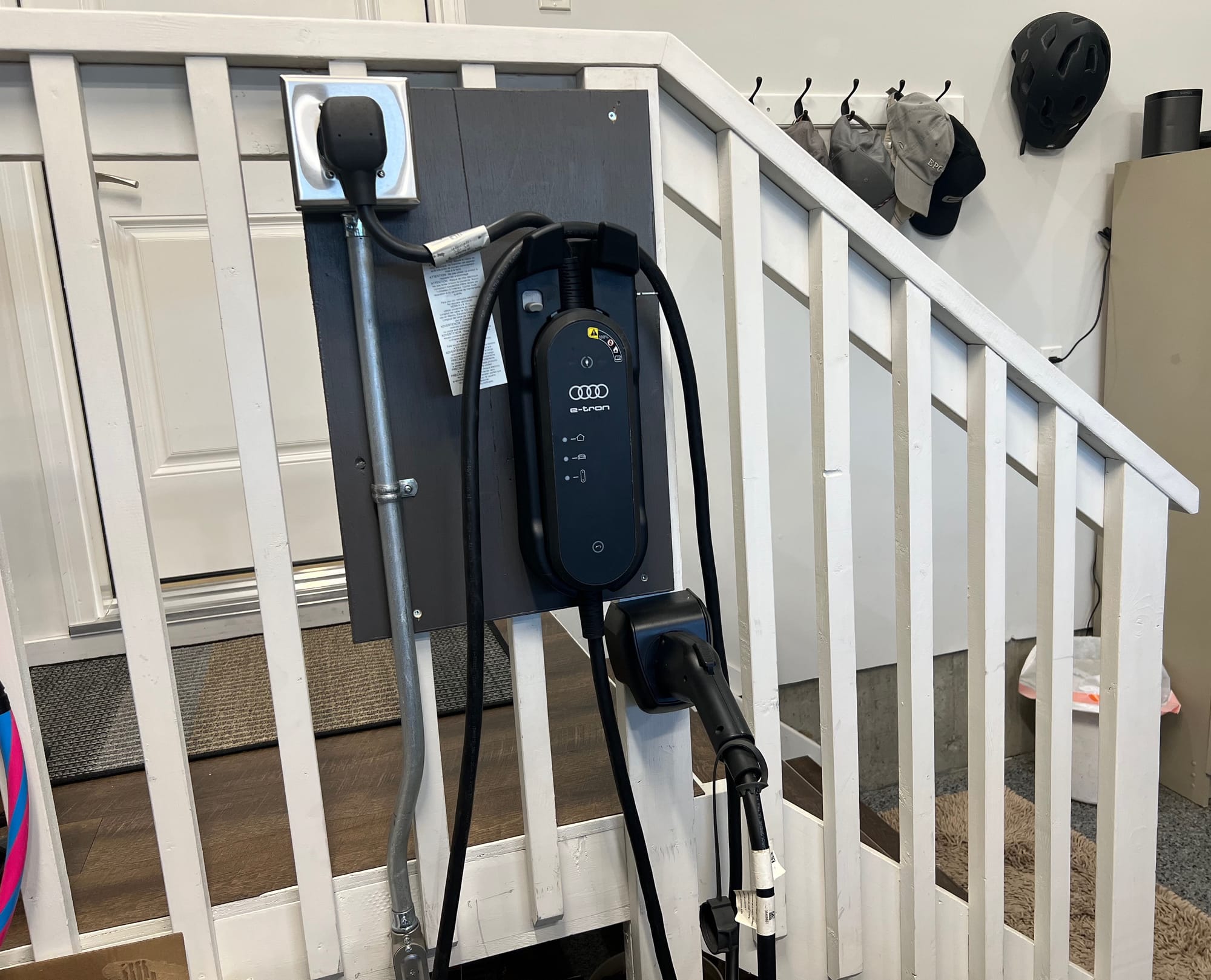
The Bottom Line: if much or most of your travel is local, if your average daily distance driven is usually relatively modest (say between 100 and 300 kilometers), and if you are able to charge at home, you will enjoy the experience most of the time. We installed a plug in the garage (pictured above) and I plug the car in to charge overnight 2 or 3 times a week. The convenience of that cannot be overstated, and will only get better when I'm able to avoid standing outside when it is -25 C and I need gas, poking at the keypad on the gas pump with gloved fingers or, worse yet, with exposed fingers. Every time I get into the car first thing in the morning after charging it overnight, I smile a bit smugly. Then I pull silently out of the garage.