Killing All The Lawyers - In Fiction - Post No. 7
In William Shakespeare's 1591 play Henry VI, Part 2, a minor character named "Dick the Butcher" spoke words that, like so many of Shakespeare's words, continue to be part of our popular culture today. Dick said "The first thing we do, let's kill all the lawyers." The shortened form of the quote is the one you usually hear, "Let's kill all the lawyers." Most often this is directly critical of lawyers because they are perceived to be helping preserve the entitlements of the rich and the powerful, or responsible for the cost or complexity of the legal system.
But this is a misreading of Shakespeare's text. Dick the Butcher was a villain helping plot the overthrow of the King for the benefit of his buddy Jack Cade, a rebel aspiring to the throne. Dick was advocating the killing of lawyers because their adherence to the rule of law was an obstacle to the plotters.
430 or so years later, in May of 2025, a US federal judge named Beryl Howell was considering Trump's effort by executive order to outlaw a law firm that had represented clients opposing him. Judge Powell noted the Shakespeare quotation in its proper context, then pointed out that Trump, like Dick the Butcher, had concluded that "Eliminating lawyers as the guardians of the rule of law removes a major impediment to the path to more power." And she was not having it. Anyone drawing a direct line from Dick the Butcher to Donald Trump earns my immediate admiration.
I recently finished reading two books by Abraham Verghese, Cutting for Stone and Covenant of Water. Dr. Verghese is a professor of medicine at Stanford University, but his novels are memorably set in Ethiopia and Kerala, India, two places where he had lived earlier in his life. Both novels contain a fair bit of graphic medical description, conditions, illnesses and some (many) surgical scenes, but he writes so beautifully and his novel is so full of interesting people that I, a famously squeamish reader, was willing to allow him this latitude.
I was led by Verghese's writing of his profession to think about lawyers in popular literature. I've never really been taken by the mainstream fictional lawyers such as those created by John Grisham, which I found to be too sensational to identify with. So which literary lawyers do I like?
Thomas Cromwell was a lawyer, although he is more often remembered as the man who kept Henry VIII in power and alternately married or divorced until (spoiler alert!) Cromwell lost his head in 1540, as tended to happen to members of Henry's court. He is memorably brought to life by Hilary Mantel in her trilogy of Wolf Hall, Bring Up the Bodies and The Mirror & The Light, the first two having each won the Man Booker Prize in the year they were published. Cromwell really wasn't a shining example of the use of a lawyer's skills for the good of society. A good administrator, yes, who created a whole church so his king could get divorced, but a champion of the people, not really. Henry came to regret having Cromwell executed, blaming his advisors for misleading him, as kings tend to do when things go bad.
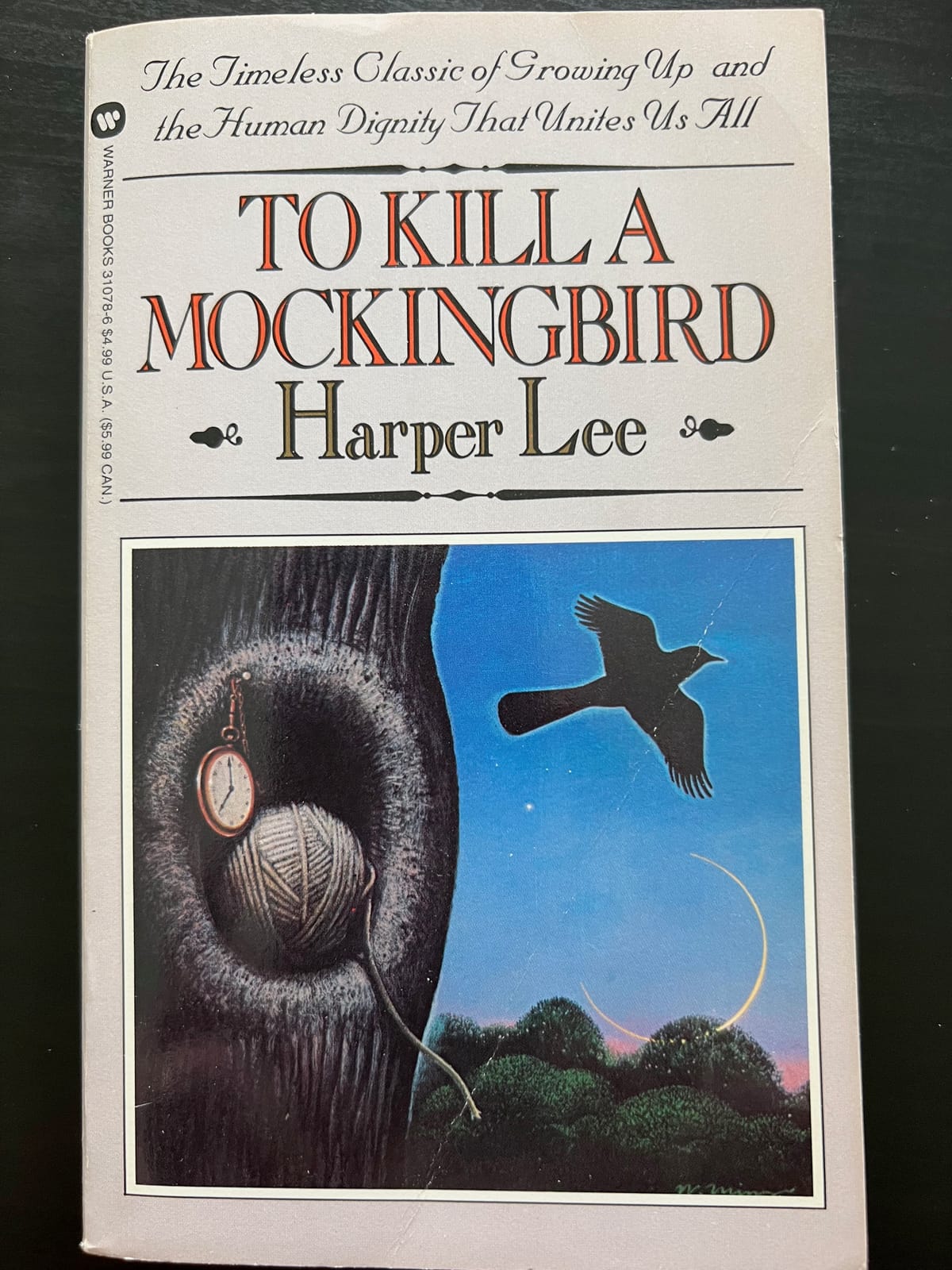
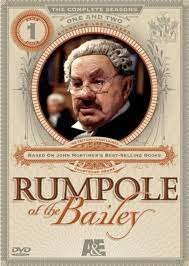
I will point you towards three fictional lawyers: Atticus Finch, Sandy Stern and Horace Rumpole. Many lawyers will mention Atticus Finch (To Kill a Mockingbird) as an inspiration, someone who defended an unpopular defendant at a personal cost. Unlike Harper Lee, who studied law but was not a lawyer, the authors of Presumed Innocent (Scott Turow) and Rumpole of the Bailey (Sir John Mortimer) are or were lawyers. Their writings of lawyers, the legal system and its judges are full of little moments of realism and small shocks of recognition - their characters think like lawyers because their authors are lawyers. Rumpole is more whimsical (his wife is famously known as "She Who Must Be Obeyed"), but his legal chops are for real.
There are good fictional judges to be found too. Here I recommend The Children Act (by Ian McEwan, a non-lawyer) and The Garden of Evening Mists (Tan Twan Eng, a lawyer). Both write so clearly about the challenges a judge faces that they can be forgiven any liberties taken. The judge in McEwan's book in particular does something I found to be unlikely, but the moral challenge she faces is expertly presented.
My friend Scott belongs to the World's Smallest Book Club (2 members, the absolute minimum to be a "Club") and though he has introduced me to many books I treasure, I don't have his access to a Club reading list nor any hope of being admitted to his Club, which would then no longer be the world's smallest. I understand. Having presented 3 lawyers and a couple of judges for you to check out, I ask you, blog readers, to recommend your favourite fictional lawyer or legal thriller. Many of you have in the past pointed me towards books I've enjoyed or come to love - I have high hopes.
So I am counting on you to help me find my next book. It doesn't have to feature a fearless lawyer facing insurmountable odds at great personal cost or danger. That would be a bonus.