Goodbye California - Post No. 1
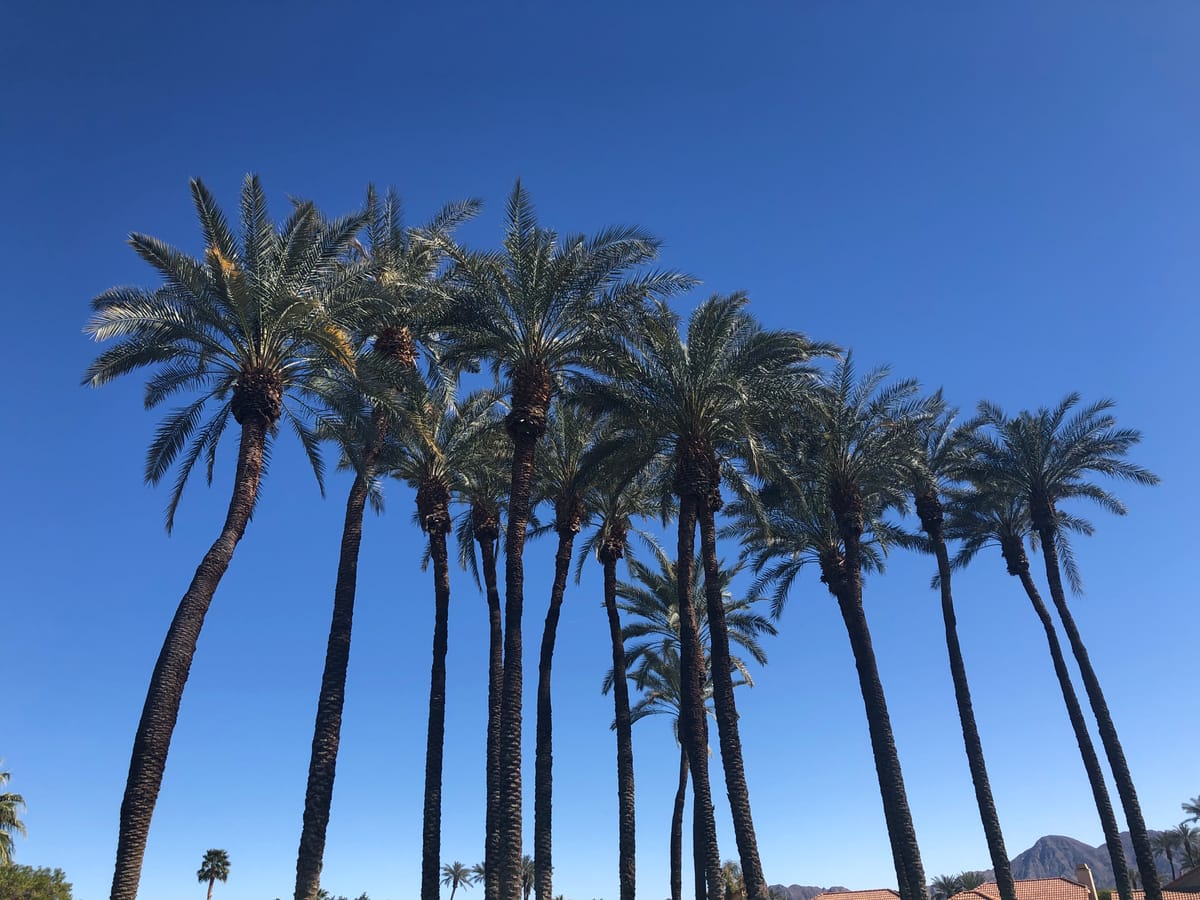
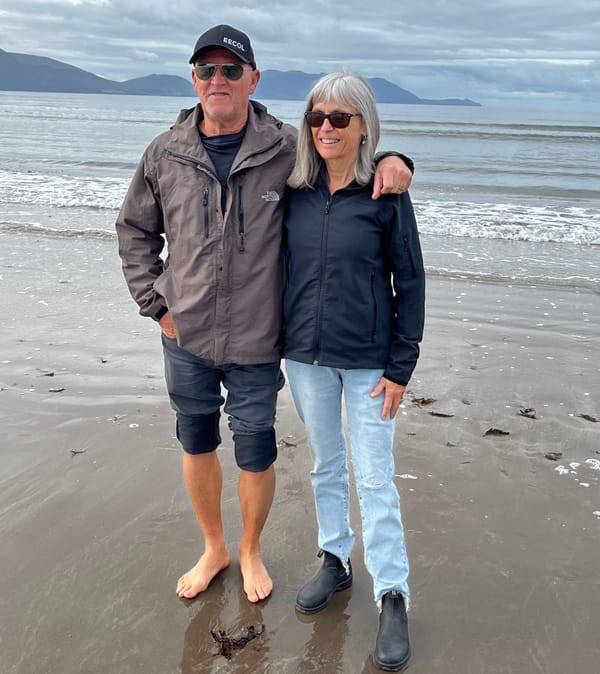
In 2007 we became “snowbirds” – Canadians who come to the southern United States periodically to avoid the harsh Canadian winters. Over the past 18 years we have come to appreciate much that California offers: friendly winter weather, convenient access, stable communities and surroundings that are interesting and beautiful. We have enjoyed culture, sports, local markets and friendly neighbours. We have paid taxes (lots of taxes), supported local businesses and come to appreciate the apparently comfortable integration of the largely white resident population and the predominately Latino support workers: cleaners, gardeners, tradespeople and service industry workers among them, whom we have found to be diligent, capable and reliable.
But – there has to be a “but” – we are leaving soon, selling our home, without any intention of returning. Snowbirds rarely stay for long, so our 18 years is a pretty long run. But we get older and the rigours of travel and the reality of health insurance makes it inevitable that we will eventually be forced to stop coming south. But why now? And why are many of our fellow Canadians doing the same thing, or thinking about it?
There are usually several reasons for these kinds of life decisions, and that’s true for us. But near the top of our list is the political instability of the United States. We weathered the first Trump presidency, but this one seems different, meaner, more dangerous. It seems that much of Trump’s support comes because he is an atypical politician: he speaks without thinking, without regard for facts, makes decisions based on emotion and instinct and pre-conceived opinions and not information or advice. He encourages people to believe that they can return to a time when the nation was simpler, when white men made most of the decisions; to believe that the brown and black people are here mostly illegally, and are responsible for most if not all of crime that exists, and certainly haven’t earned the right to govern or manage or own as he has. His deluge of executive orders in the early days of his second term, where they aren’t purely vindicative or punitive, are chaos inducing, by design. It has long been an article of faith that US institutions, the Courts and the constitution are strong enough to withstand an occasional despot or nut. Even if that is true, and we hope it is, it seems impossible to avoid a period of social, economic, legal and political upheaval that will eventually affect the lives of everyone living here. Prepare for the most litigious presidency ever.
It is not useful to point out the various ways that the US struggles as a nation, but I will anyway: its system of government, designed 250 years ago, is not equipped to deal with the challenges of the new world order. You would be hard pressed to identify another “developed” country that can’t pass a simple budget, whose government regularly ceases to function because its elected leaders haven’t been able to agree on a budget that would allow it to borrow even more money to finance its activities. That has gun laws so irrational, so archaic, so barbaric, that virtually all its children are at risk of being shot at school, and where the proposed solution to that madness is, you guessed it, more guns: guns for teachers, guns for administrators, guns for school security officers and hall monitors. Schools are to be “hardened”, as if that is possible and reasonable and helpful and not pure insanity. A solution that would allow gun ownership to continue unaffected by its social cost. Where in many places being able to carry one’s gun on the hip, as was common 150 years ago, is perfectly acceptable. Where private militias are not just tolerated, they are protected and supported and pardoned. Where the highest Court considers all issues through the lens of a 250-year-old document, trying to determine what a particular group of white men thought and said about questions that never came up, and could not possibly have been imagined. Should everyone be entitled to semi-automatic assault rifles because in 1776 they (again, white men) needed muskets to defend themselves against their own government, or against another country or against an uprising of their slaves? It is a place where health care is available to the comfortably well off, and the poorest of the poor, but not to huge swathes of people between those two groups. Where going bankrupt because of a medical crisis is so common it’s unremarkable.
A country whose elected leader respects any election he wins, but none that he doesn’t. Who is perfectly willing to extort what he wants with threats and actions against other nations, conduct that plays well to his base, but is translated into other languages as “give us want we want, or suffer the consequences.” The language of the bully, of the outlaw, the gangster. He perceives that US national interests would be well served by “acquiring” the Panama Canal, and Greenland, and rather than negotiating to advance the national interest, he simply makes threats, knowing that threats are almost as effective as the actions they speak of. Greenland will be acquired “one way or another.”
Trump has said, more than once, that Canada would be better off if it was part of the US, apparently because we would pay less taxes, as if that is the sole determinant of national contentment and identity. Without mentioning that we would lose a health care system that, though imperfect, is at least humane. That we would need to arm ourselves in ways we find abhorrent, and teach our children how to perform in and understand the active shooter drills they must master. He seems to believe that the US is supporting Canada because there is a trade imbalance: Canada exports more to the US than it buys. This ignores the fact that included in these export figures is the crude oil and natural gas sold to US buyers at discounted prices and used by US companies to generate energy or refined products.
A portion of Americans are tuned out and don’t hear what Trump says, ever. Another portion hears his suggestions for Canada and assumes that like Puerto Rico we are desperate to get into the union, but too polite to ask (being Canadian). Another portion of the country hears only the semi-joking tone, and assumes that, as Trump often says about outrageous speech, he is only joking. But almost no one in America perceives these comments as truly offensive, as ignorant and disrespectful of our history and culture. We have no wish to be American. Mr. Trump cannot comprehend a love for a country so different from the "America First" brand of patriotism. Like the US, Canada is an imperfect union, but it is one that can care for its sick, send its children to school in relative safety if they dress warmly, and isn’t burdened by a Supreme Court so ridiculously politicized and unethical that it is nearly irrelevant. It can pass a budget and provide services for its citizens. And it can hold elections that take a month or two and don’t result in insurrections.
If it seems like US prosperity is endless and unchangeable, one should consider what will happen if the presidential chaos doesn’t result in a rush of new American manufacturing, but rather in a gradual weakening of the US dollar. Tariffs are inflationary, and so is a declining currency value, so is the endless financing of escalating national debt. What happens if Canadians or Australians or Europeans stop coming to the US, or stop buying US cultural, sporting or entertainment exports? If US Treasury Bonds used to finance its debt are no longer desired by world markets? If Canadian goods and services in the US suddenly become more expensive as part of a strategy of economic intimidation, Americans may finally grasp that they have voted (or many of them have) against their own economic self-interest, whether in the belief that the social or cultural benefits are worth any cost, even their own prosperity, or because they haven’t imagined that their prosperity could be battered intentionally by their own President, trying out an economic policy he's always wanted to try.
For most of its history the US standard of living has benefitted from cheap labour: slaves stolen from Africa, railway builders from China, Central American and Mexican migrant labour, legal or not. From the import of cheap goods built or produced with cheap labour in China, or Vietnam, or Bangladesh, or India. How much are Americans willing to pay for a phone, or a TV or a fridge or a pair of yoga tights or running shoes made by Americans of American materials? Twice as much? Three times as much? The US is enmeshed in a complex global economy it helped to create and directly benefitted from. Extricating itself from the global economy will be expensive and painful. The American standard of living has long benefited from the sheer size of its economy, attracting investment. Trump apparently believes that nothing can affect that American prosperity, and he is willing to stake his legacy on that belief. But it isn’t his prosperity that is at stake – it’s those of American citizens, Republican, Democrat and other.
One of the reported consequences of this new official American attitude towards non-citizens is the idea that if you don’t love our President, you aren’t welcome here. Merely expressing the thoughts I’ve written here may well result in my being prohibited from entering the US in the future, or being summarily detained and deported if I am not carrying the required documentation confirming my visitor status. Palm Springs has begun a public campaign to let Canadians know they are welcomed and valued. But if your federal government is threatening me at the same time your local government is thanking me for coming, it cannot be a surprise that we will choose to take our winter lifestyle somewhere else.
So we’re leaving California, and so are other snowbirds here and in Arizona and Texas and Florida. We will miss your weather and your friendship. We will not miss the chaos. The New York Times columnist David Brooks recently pointed out that the opposite of stupidity isn’t intelligence – it’s rationality. And Trump and his acolytes have set out to prove that being rich (or pretending to be rich) has no correlation to rational decisions. The consequences of our individual decisions to leave the US won’t be felt immediately, but they will be felt. Amid all this self-induced chaos though, those consequences may not be noticed unless you know where to look.